

In today's world everyone is living under the arms of demons of stress, depression, monotony and anxiety. Our brains are clamped in the chains of only work and our heart has forgotten to fly. People have become so engrossed in their studies and work-life that they have forgotten to embrace small beauties of the world like the warmth of sunshine, the melodious chirping of birds, changing colors of leaves in different seasons and the coldness of moon. Everyone is so eager to win the ratrace that they choke off their hobbies and interests and hidden talents remain hidden.
The term Indian classical drama refers to the tradition of dramatic literature and performance in ancient India. The roots of drama in the Indian subcontinent can be traced back to the Rigveda (1200-1500 BCE), which contains a number of hymns in the form of dialogues, or even scenes, as well as hymns that make use of other literary forms such as animal fables However, Indian drama begins its classical stage in the 3rd-4th century BCE with the composition of the Nātyaśāstra (lit. The Science of Drama).Indian classical drama is regarded as the highest achievement of Sanskrit literature. The Buddhist playwright, poet and philosopher Asvaghosa
Mono acts are quite popular on the Indian stage. But what does it take for an actor to be the only one to play multiple characters? And how does he ensure the audience follows him and stays interested? Heena Khandelwal speaks to theatre persons to find out.A mono act is a small act where only one actor is performing. And I prefer some good monologues for that instead of an act where 2 different characters are there. Because it is quite difficult to switch on and off between a character and maintain the pace of the act. So, I personally prefer a single character monologue to perform. But if your son is determined and convinced that he can perform 2 characters well, than you can go along with it too.
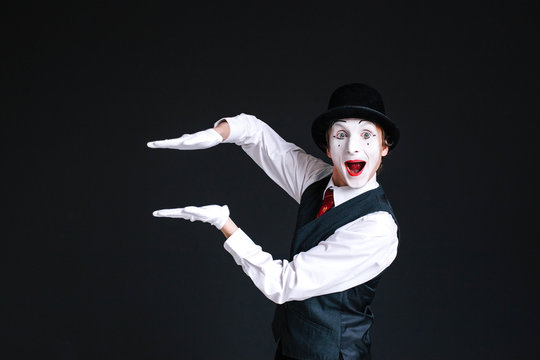
Mime is important because it is an effective way of encouraging students to develop their acting skills in terms of body language (posture, movements, gestures, etc.) and for them to gain a greater awareness of its importance as a form of communication. In the exams, it tests candidates’ ability to produce a performance which demonstrates a thoughtful interpretation, use of body and space, a sense of spontaneity and conscious awareness of audience. In grades 1 and 2 for Speech and Drama and Acting (solo)) the mime task’s emphasis is on storytelling and encourages candidates to create an imaginary world clearly, communicate feeling and thought physically (with the whole body not just the face), and to tell a simple story.
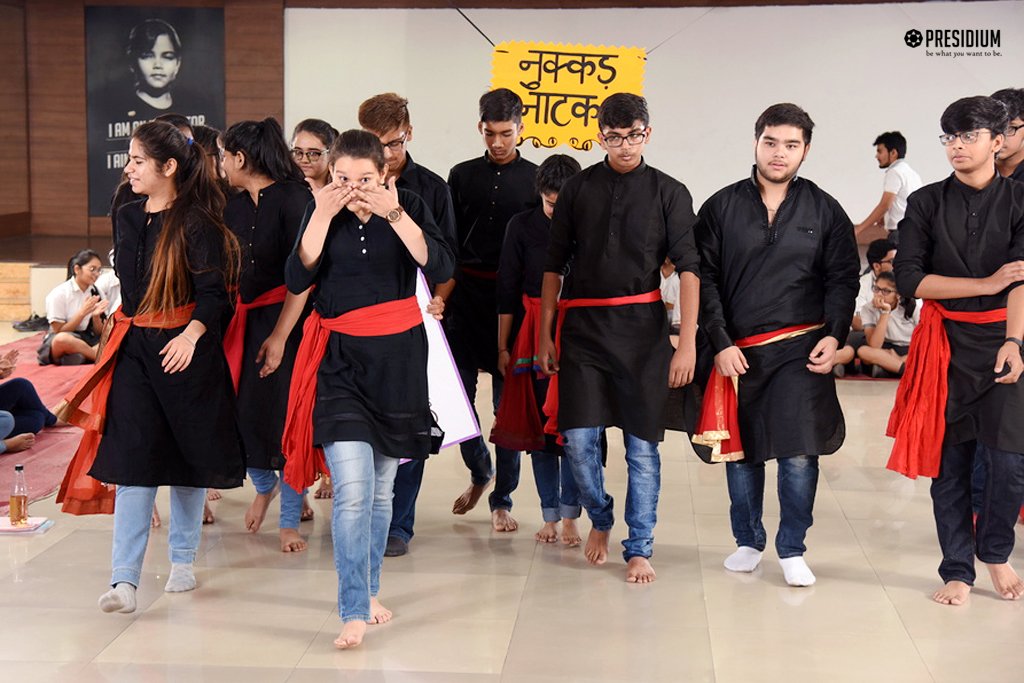
Nukkad Natak is a form of theatrical performance and presentation in outdoor public spaces without a specific paying audience. These spaces can be anywhere, including shopping centres, car parks, recreational reserves, college or university campus and street corners. They are especially seen in outdoor spaces where there are large numbers of people. The actors who perform street theatre range from buskers to organised theatre companies or groups that want to experiment with performance spaces, or to promote their mainstream work. It was a source of providing information to people when there were no sources of providing information like television, radio etc. Nowadays, street play is used to convey a message to the crowd watching it.
A play is a work of drama, usually consisting mostly of dialogue between characters and intended for theatrical performance rather than just reading. The writer of a play is called a playwright. Plays are performed at a variety of levels, from London's West End and Broadway in New York City which are the highest level of commercial theatre in the English-speaking world to regional theatre, to community theatre, as well as university or school productions. A stage play is a play performed and written to be performed on stage rather than broadcast or made into a movie. Stage plays are those performed on any stage before an audience.
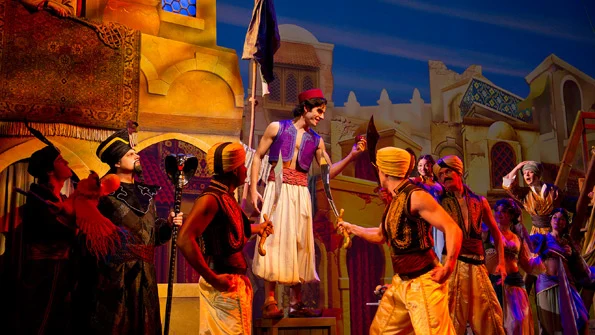
Comedy is a genre of fiction that consists of discourses or works intended to be humorous or amusing by inducing laughter, especially in theatre, film, stand-up comedy, television, radio, books, or any other entertainment medium. The term originated in ancient Greece: in Athenian democracy, the public opinion of voters was influenced by political satire performed by comic poets in theaters. The theatrical genre of Greek comedy can be described as a dramatic performance pitting two groups, ages, genders, or societies against each other in an amusing agon or conflict. Northrop Frye depicted these two opposing sides as a "Society of Youth" and a "Society of the Old"